
Real love stories · Six chapters from history

Love letters from history

True stories of couples who chose each other — through prejudice, distance, grief and the ordinary business of daily life. Each is drawn from the public historical record, with a gentle note on what it can teach us today.

These are real people and real events, summarised editorially from widely documented public sources. We have not invented dialogue; where a quotation appears, it is one that has been broadly recorded. Every relationship — even a celebrated one — had its complexities, and we share these stories for inspiration rather than as perfect models.

I

Richard & Mildred Loving

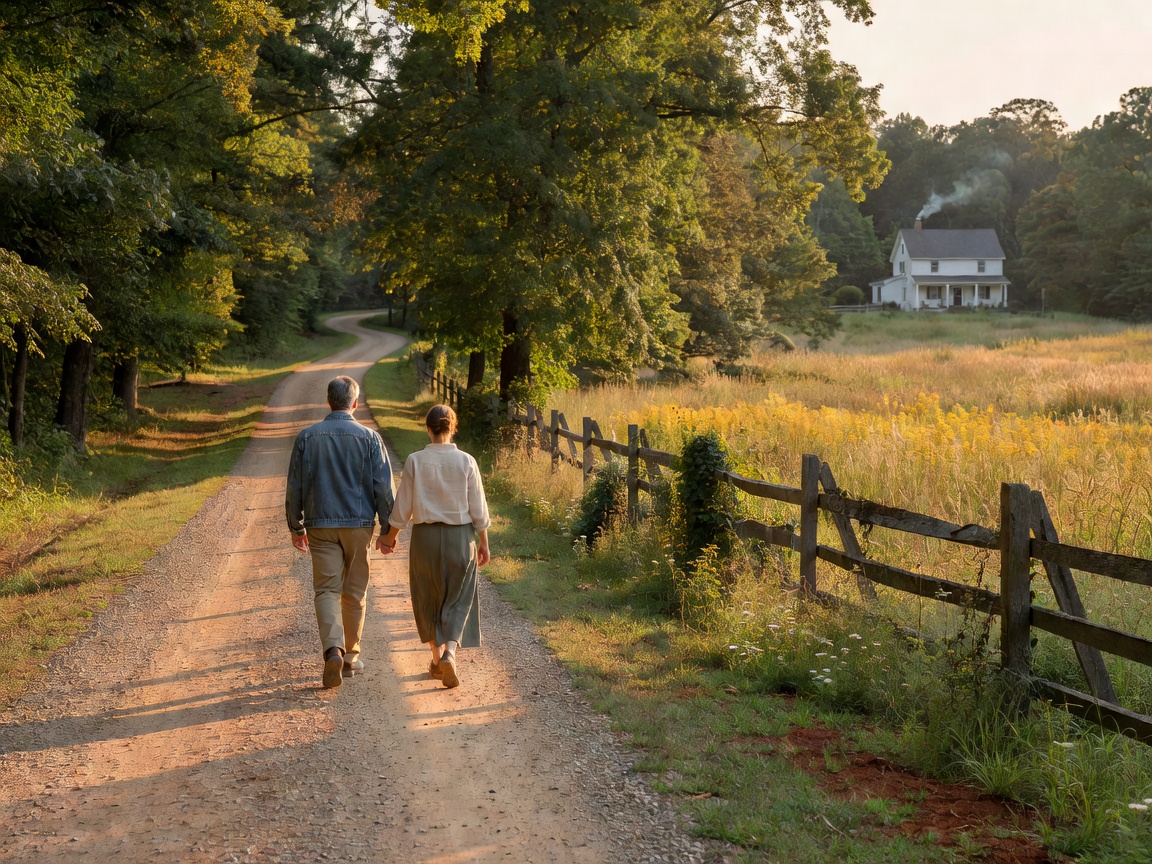
Sunlit country road in Virginia evoking a couple’s journey home
all they wanted was to go home

“Tell the court I love my wife”

Richard Loving and Mildred Jeter grew up in the same small rural community in Caroline County, Virginia. He was white; she was of Black and Native American heritage. They fell in love as young people, and in June 1958 they travelled to Washington, D.C. to marry — because Virginia law at the time banned interracial marriage.

Weeks after returning home, they were arrested in their bedroom in the middle of the night. In 1959 they pleaded guilty, and a judge suspended their prison sentence on the condition that they leave Virginia and not return together for 25 years. The couple moved to Washington, D.C., but missed their families and the countryside they loved.

In 1963 Mildred wrote to the U.S. Attorney General, Robert F. Kennedy, who referred her to the American Civil Liberties Union. Their case reached the U.S. Supreme Court. Richard did not attend the hearing, but asked his lawyer to pass on a simple message that has become one of the most quoted lines in civil rights history: “Tell the court I love my wife, and it is just unfair that I can’t live with her in Virginia.”

On 12 June 1967, the Court ruled unanimously in Loving v. Virginia that bans on interracial marriage were unconstitutional. The Lovings went home and raised their three children. Today, 12 June is celebrated by many as “Loving Day.”

What their story teaches usLove doesn’t need eloquence to be powerful. The Lovings were private, unassuming people — their strength lay in simply, steadily refusing to give up on each other.
II

Elizabeth Barrett & Robert Browning

Stack of handwritten Victorian love letters beside a quill pen
a courtship of nearly six hundred letters

A romance written in letters

In January 1845, the young poet Robert Browning wrote to Elizabeth Barrett, then one of England’s most celebrated poets, after reading her work. His first letter began: “I love your verses with all my heart, dear Miss Barrett.” Elizabeth, in fragile health, lived largely confined to her room at her family’s home on Wimpole Street in London, under the watch of a father who forbade his children to marry.

What followed was one of literature’s great courtships. Over around twenty months the pair exchanged close to six hundred letters — playful, intellectual and increasingly tender. They first met in person in May 1845, and Robert visited regularly thereafter.

On 12 September 1846 they married secretly at St Marylebone Parish Church. A week later Elizabeth slipped away from home, and the couple travelled to Italy, eventually settling in Florence. Her father never forgave her. In Italy her health improved, and in 1849 their son was born.

In 1850 Elizabeth published Sonnets from the Portuguese, love poems written during their courtship, including the immortal opening line “How do I love thee? Let me count the ways.” She died in Florence in 1861, in Robert’s arms. Their letters survive, and remain a moving record of two minds falling in love.

What their story teaches usWords matter. Long before apps and video calls, two people built deep intimacy through curiosity and honest writing — a reminder for long-distance couples that a handwritten letter is still wonderfully romantic.
III

Marie & Pierre Curie

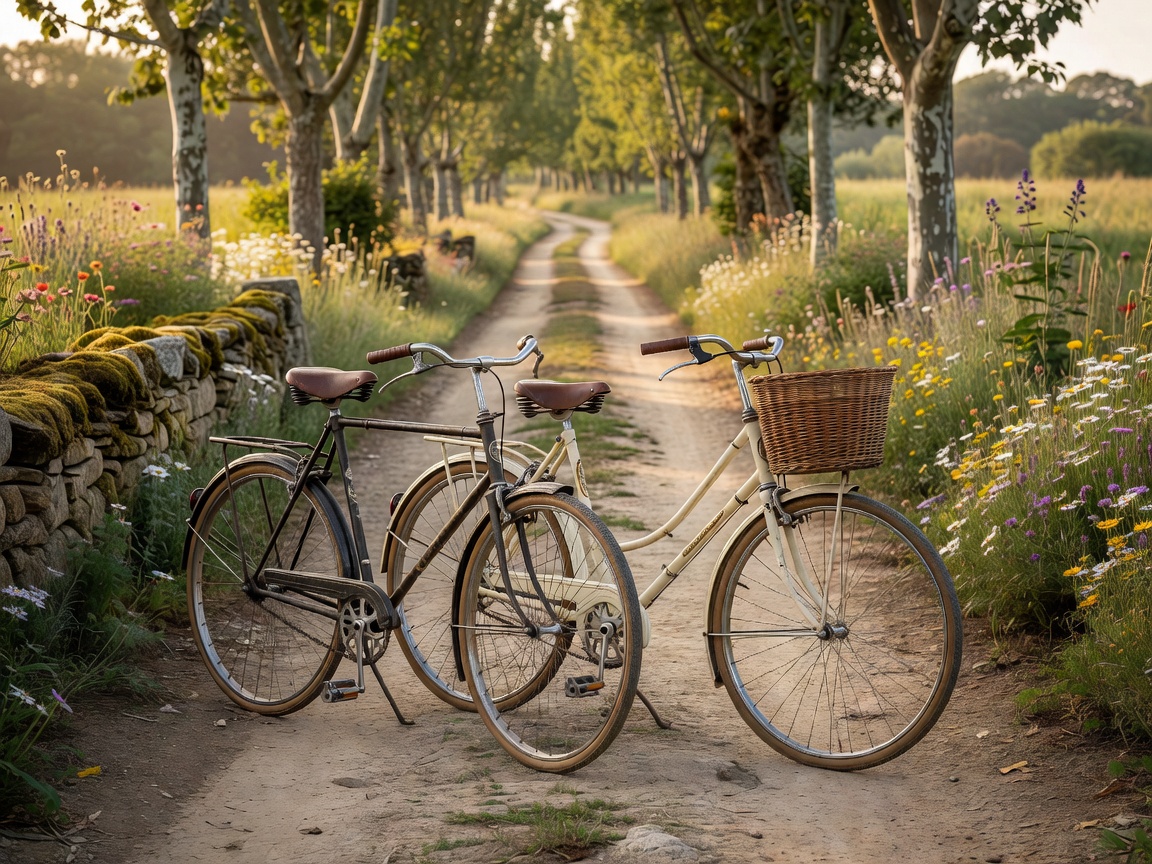
Two vintage bicycles resting together on a French country lane
a honeymoon on two wheels

A blue dress and two bicycles

Maria Skłodowska arrived in Paris from Poland to study physics and mathematics at the Sorbonne. In 1894 she was introduced to Pierre Curie, a French physicist, because she needed laboratory space. They bonded over science — and a shared sense that work and life could be devoted to discovery.

They married in July 1895 in a simple civil ceremony. Marie famously chose a practical dark blue dress she could later wear in the laboratory, and the couple spent their honeymoon cycling through the French countryside on bicycles bought with a wedding gift.

Working side by side in a draughty shed, they discovered the elements polonium — named for Marie’s homeland — and radium. In 1903 they shared the Nobel Prize in Physics with Henri Becquerel. Pierre insisted that Marie’s contribution be properly recognised.

Their partnership ended suddenly in April 1906, when Pierre was killed in a street accident in Paris. Grief-stricken, Marie kept a private journal addressed to him, and carried on their work. She succeeded him as professor at the Sorbonne — the first woman to hold the post — and in 1911 won a second Nobel Prize, in Chemistry.

What their story teaches usShared purpose can be its own love language. The Curies show how championing each other’s ambitions — and celebrating each other’s achievements — can be deeply romantic.
IV

Ruth Bader & Martin Ginsburg

Home kitchen table set for a shared dinner for two
he cooked, she wrote, they cheered each other on

A partnership of equals

Ruth Bader and Martin “Marty” Ginsburg met as students at Cornell University in the early 1950s. Ruth often recalled that Marty was the first young man she dated who cared that she had a brain. They married in 1954.

Both went on to Harvard Law School. When Marty was diagnosed with cancer during his studies, Ruth — while caring for their young daughter and keeping up with her own coursework — attended his classes, took notes and typed his papers so he could graduate. He recovered and became a highly respected tax lawyer.

In an era when this was rare, the Ginsburgs shared domestic life as equals. Marty, a gifted and enthusiastic cook, took charge of the family kitchen, and he actively championed his wife’s career — including relocating to Washington when she was appointed to the federal appeals court in 1980. In 1993 Ruth was appointed to the U.S. Supreme Court.

They were married for 56 years, until Marty’s death in 2010. Shortly before he died, he left Ruth a tender handwritten note telling her she was the only person he had loved in his life, and how much he had admired her from the day they met.

What their story teaches usLove grows when the “invisible work” of daily life is shared fairly and each partner is genuinely proud of the other. See our guide to healthy relationship habits.
V

Johnny Cash & June Carter Cash

Vintage microphone on a softly lit concert stage
a duet that lasted thirty-five years

A proposal in front of a crowd

Johnny Cash and June Carter, of the famous Carter Family of country music, first met backstage at the Grand Ole Opry in Nashville in the 1950s, when both were married to other people. In the years that followed they toured and performed together, and a deep friendship slowly became something more.

June stood by Johnny through a difficult period of addiction in the 1960s, and their stage chemistry became legendary. Their duet “Jackson” won a Grammy Award. On 22 February 1968, during a concert in London, Ontario, Johnny proposed to June on stage, in front of the audience. She said yes, and they married on 1 March 1968 in Franklin, Kentucky.

They remained married for 35 years and continued to perform and record together. June died in May 2003. Johnny, devastated, kept working on music in the months that followed, and died that September — just four months after her.

What their story teaches usLasting love isn’t untroubled love. The Cashes faced real struggles, and their story speaks to patience, support and the importance of seeking help — something we always encourage through trusted resources like Relate.
VI

Paul Newman & Joanne Woodward

Classic theatre stage framed by red velvet curtains
it began on Broadway

Fifty years, far from the spotlight

Paul Newman and Joanne Woodward met in 1953 during the Broadway production of Picnic, in which Newman was cast and Woodward was an understudy. They married in January 1958 in Las Vegas — the same year Woodward won the Academy Award for Best Actress for The Three Faces of Eve.

In a profession known for short-lived marriages, theirs endured. They acted together in a number of films, and Newman directed Woodward in Rachel, Rachel (1968). Rather than living at the centre of Hollywood, they raised their family in Westport, Connecticut, and were known for valuing privacy and community.

They were married for fifty years, until Newman’s death in September 2008. Throughout, both spoke with warmth and humour about the work and respect a long marriage requires.

What their story teaches usProtect the space where your relationship lives. Choosing a life that nurtures your partnership — rather than one designed to impress others — is a quietly radical act of love.
♡

From their stories to yours

Six lessons worth keeping

Across centuries and continents, these couples share a few common threads — threads any of us can weave into our own relationships, whatever our story looks like.

  • Steadiness over spectacle: the Lovings simply kept choosing each other.
  • Curiosity through words: the Brownings fell in love through attentive, honest letters.
  • Shared purpose: the Curies built a life around a passion they held in common.
  • Equality in the everyday: the Ginsburgs shared the load and celebrated each other.
  • Support through hard seasons: the Cashes weathered real struggles together.
  • Protecting your private world: Newman and Woodward guarded the life they made.

Want to put these lessons into practice? Try a daily ritual with Paired, a deeper conversation with Gottman Card Decks, or explore how you each feel cared for with the 5 Love Languages Quiz.

Love stories FAQs

Are these love stories true?

Yes. Each story concerns real people and well-documented events. We summarise them editorially from widely available public sources and do not invent dialogue or details.

Why include couples whose relationships had difficulties?

Because real love is rarely perfect. These stories are shared for inspiration, not as flawless models — and they show that commitment, support and honesty matter most when life is hard.

Will you add more real love stories?

We plan to add further stories over time. If there is a well-documented love story you think we should feature, please write to us with the subject “Suggest a resource”.

Write your own chapter

Every great love story begins somewhere